CPS Events
Small UAV Autonomy: Time-Coordinated Missions
Seminar presentation begins at 2:00 pm until 3:00 - reception with refreshments from 3:00 to 3:30 pm.
Abstract:
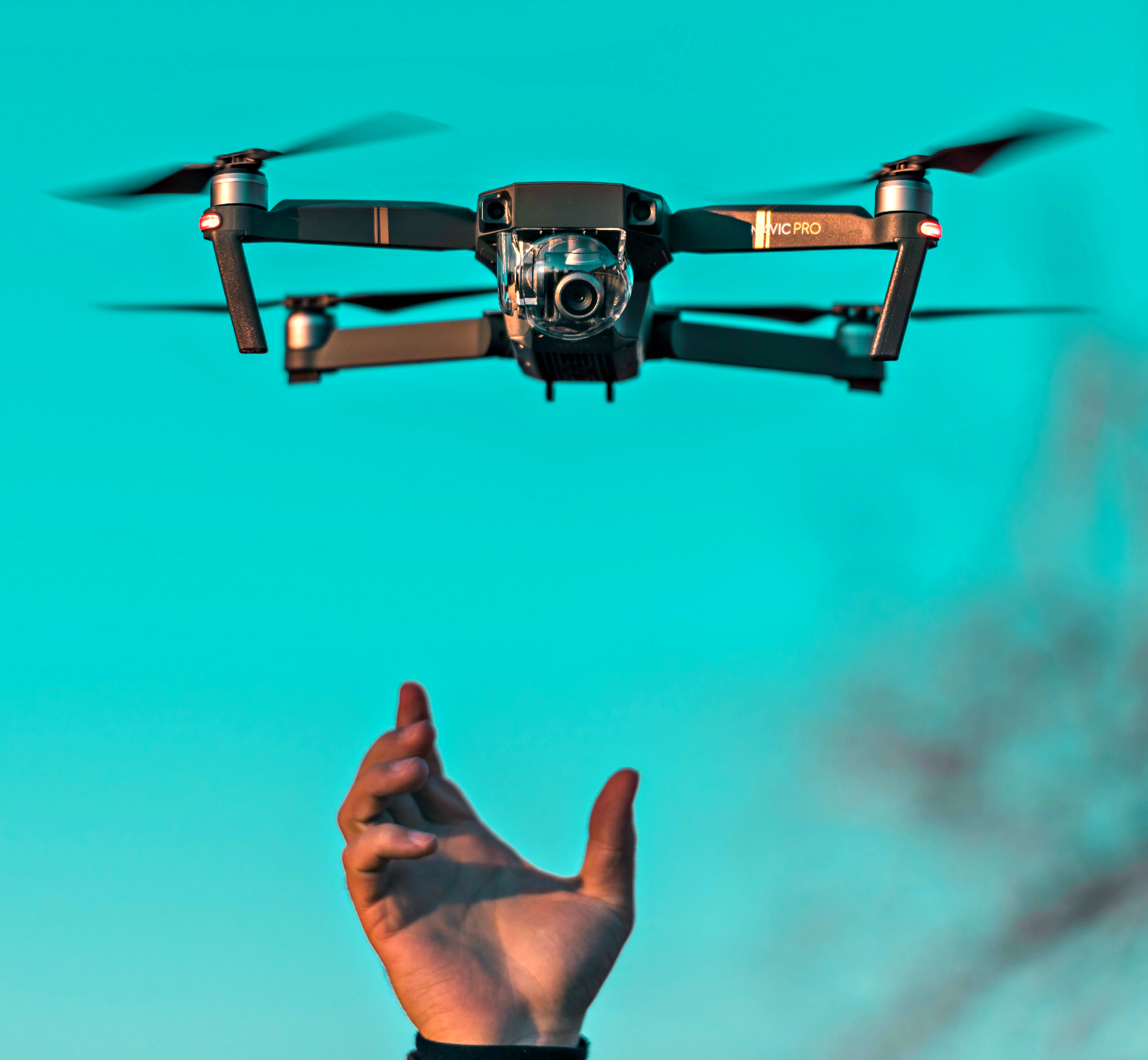
The urgent need to integrate Unmanned Air Vehicles (UAVs) into the national airspace requires that these vehicles posses high levels of autonomy and are capable of executing complex missions in a safe, reliable manner. A large subset of these missions requires that UAVs arrive at their final destinations either at the same time or separated by pre-defined time intervals. This first part of the talk will introduce many examples of such missions and will proceed to discuss in some detail the technologies involved. A representative example includes the challenging mission scenario where the vehicles are tasked to cooperatively execute collision-free maneuvers and arrive at their final destinations at the same time (time-critical operations). In the setup adopted, the vehicles are assigned nominal spatial paths and speed profiles along these paths. The paths are then appropriately parameterized and the vehicles are requested to execute cooperative path following, rather than “open loop” trajectory tracking maneuvers. This strategy yields robust behavior against external disturbances by allowing the vehicles to negotiate their speeds along the paths in response to information exchanged over the dynamic inter-vehicle communications network.
The talk addresses explicitly the situation where each vehicle transmits its coordination information to only a subset of the other vehicles, as determined by the communications topology. Furthermore, we consider the case where the communication graph that captures the underlying communications topology is disconnected during some interval of time or even fails to be connected at all times. Conditions are given under which the complete time-critical cooperative path-following closed-loop system is stable and yields convergence of a conveniently defined cooperation error to a neighborhood of the origin. Flight test results demonstrate the efficacy of the multi-UAV cooperative control framework presented in this part of the talk.
Biography:
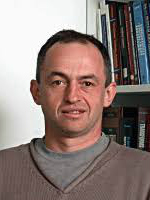
Isaac Kaminer received PhD in Electrical Engineering from University of Michigan in 1992. Before that he spent four years working at Boeing Commercial first as a control engineer in 757/767/747-400 Flight Management Computer Group and then as an engineer in Flight Control Research Group. Since 1992 he has been with the Naval Postgraduate School first at the Aeronautics and Astronautics Department and currently at the Department of Mechanical and Aerospace Engineering where he is a Professor. He has a total of over 20 years of experience in development and flight testing of guidance, navigation and control algorithms for both manned and unmanned aircraft. His more recent efforts were focused on development of coordinated control strategies for multiple UAVs and vision based guidance laws for multiple UAVs. Professor Kaminer has co-authored more than a hundred refereed journal and conference publications.
CPSRC Seminar Series: Real-time Control of Spatial Dose Delivery in Plasma Medicine
Abstract:
Atmospheric pressure plasma jets (APPJs) have widespread use in materials processing and biomedical applications. Safe and effective operation of hand-held APPJs is however highly sensitive to the intrinsic variability of plasma characteristics as well as to exogenous disturbances such as variations in the separation distance between the device tip and target surface. Key challenges in feedback control of APPJs arise from the need to: (i) handle the nonlinear, multivariable nature of plasma dynamics, (ii) retain the system operation in a constrained region for safe and reliable operation, and (iii) realize multiple (possibly conflicting) plasma dose delivery objectives. In this talk, we will demonstrate the importance of using model-based control strategies for safe, reproducible, and therapeutically effective application of APPJs for dose delivery in plasma medicine.
Bio:
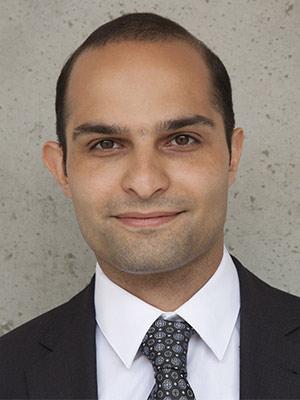
Ali Mesbah is Assistant Professor of Chemical and Biomolecular Engineering at the University of California at Berkeley. Before joining UC Berkeley, he was a senior postdoctoral associate at MIT. He holds a Ph.D. degree in systems and control from Delft University of Technology. He is a senior member of the IEEE Control Systems Society and AIChE. He is on the IEEE Control Systems Society conference editorial board as well as the editorial board of IEEE Transactions on Radiation and Plasma Medical Sciences. He is the recipient of the AIChE's 35 Under 35 Award in 2017, the IEEE Control Systems Outstanding Paper Award in 2017, and the AIChE CAST W. David Smith, Jr. Graduation Publication Award in 2015. His research interests are in the areas of optimization-based systems analysis, fault diagnosis, and predictive control of uncertain systems.
CPSRC Seminar Series: Precision Measurement of Mild Brain Trauma Using an Instrumented Mouthguard
Abstract:
Mild traumatic brain injury (mTBI) affects 45 million people worldwide each year and can lead to neurodegenerative tauopathys such as Alzheimer’s and Chronic Traumatic Encephalopathy. My goal is to enable early detection and prevention of mTBI. My laboratory has pioneered instrumented mouthguard technologies that precisely measure the acceleration of the head during impact, which we use to drive finite element (FE) models of the brain and calculate injury location and severity. In this talk, I will describe the instrumented mouthguard technology development and validation, as well as initial clinical results of FE computed brain strain compared to novel highly sensitive neuroimaging data. This preliminary data suggests that blood brain barrier disruption, a potential initiator of neurodegeneration, may be very common in contact sports and is detectable in real-time with the mouthguard. Finally, I will present data on early prototypes of an optimal shock absorber that has the potential to prevent mTBI in helmets for football and other high-risk activities.
Bio:
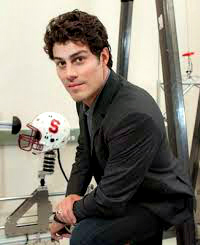
David B. Camarillo is Assistant Professor of Bioengineering, (by courtesy) Mechanical Engineering and Neurosurgery at Stanford University. Dr. Camarillo holds a B.S.E in Mechanical and Aerospace Engineering from Princeton University, a Ph.D. in Mechanical Engineering from Stanford University and completed postdoctoral fellowships in Biophysics at the UCSF and Biodesign Innovation at Stanford. Dr. Camarillo worked in the surgical robotics industry at Intuitive Surgical and Hansen Medical, before launching his laboratory at Stanford in 2012. His current research focuses on precision human measurement for multiple clinical and physiological areas including the brain, heart, lungs, and reproductive system. Dr. Camarillo has been awarded the Hellman Fellowship, the Office of Naval Research Young Investigator Program award, among other honors including multiple best paper awards in brain injury and robotic surgery. His research has been funded by the NIH, NSF, DoD, as well as corporations and private philanthropy. His lab’s research has been featured on NPR, the New York Times, The Washington Post, Science News, ESPN, and TED.com as well as other media outlets aimed at education of the public.

CPSRC 2018-19 Academic Year Kick-Off Event
Start out the 2018-19 academic year at the Cyber-Physical Systems Research Center (CPSRC) kick-off gathering, Thursday, September 27th, from 1:30 to 3:30 pm in room E2-599. The agenda includes a summary of the center's recent accomplishments, projects and activities, as well as a snapshot of the great opportunities ahead for this year. Refreshments will be served, plus there will be plenty of time to network and discuss with your colleagues and our industry affiliates who have also been invited. The event is open to current CPSRS affiliates and any current or new students, postdocs or faculty interested in becoming affiliates or just learning more -- so invite anyone you think might be interested. We hope to see you there.
CPSRC Seminar Series: On Boundary Feedback Control of 1-D Hyperbolic Conservation Laws: Robustness to Measurement Noise
Abstract:
The tight description of many physical phenomena relies on mathematical models in which variables that depend simultaneously on space and time are related each other through differential relationships. This leads to systems modeled via partial differential equations (PDEs). Systems modeled via PDEs are omnipresent in physical sciences and this has a dramatic impact on the relevance of PDE models in engineering applications.
In this talk, we will consider a special class of hyperbolic PDEs, i.e., the class of 1-D linear hyperbolic conservation laws. The main interest in linear hyperbolic conservation laws is that such equations are ubiquitous in physical applications. Transport of electrical energy, the flow of fluids in open channels, the motion of chemicals in flow reactors; just to mention some, are typical examples of processes that can be mathematically described by 1-D linear conservation laws.
The main focus of this talk is on boundary feedback control design for 1-D linear hyperbolic conservation laws. Sufficient conditions in the form of Lyapunov-like functional inequalities are given to certify the existence of a bound on the $\mathcal{L}_2$ (spatial) norm of the state with respect to energy bounded measurement noise. Semidefinite programming techniques are adopted to devise a systematic design algorithm. The effectiveness of the approach is shown in a numerical example.
Bio:
Francesco Ferrante is an assistant professor of Automatic Control (maître de conférences) at the University of Grenoble Alpes and member of the Grenoble Images Speech Signal and Control Laboratory.
He received in 2010 a “Laurea degree” (BSc) in Control Engineering from University “Sapienza” in Rome, Italy and in 2012 a “Laurea Magistrale” degree (MSc) cum laude in Control Engineering from University “Tor Vergata” in Rome, Italy. During 2014, he held a visiting scholar position at the Department of Computer Engineering, University of California Santa Cruz. In 2015, he received a PhD degree in control theory from “Institut supérieur de l'aéronautique et de l’espace” (SUPAERO) Toulouse, France. From November 2015 to August 2016, he was a postdoctoral fellow at the Department of Electrical and Computer Engineering, Clemson University. From August 2015 to September 2016, he held a position as postdoctoral scientist at the Hybrid Systems Laboratory (HSL) at the University of California at Santa Cruz.
His research interests are in the general area of systems and control with a special focus on hybrid systems, observer design, application of convex optimization in systems and control.